Rio Doce consultancy
Check out and access the content.
- ABOUT
- TERRITORIES
- PUBLICATIONS
RIO DOCE PROJECT
Technical Assistance for those affected – Adai, arrives in Espírito Santo. After 7 years of struggle, at the end of 2022, in December, the selection of the technical assistance team took place, and in February 2023, they began their work in the affected territories. It is at this moment that they enter the field, after much struggle and organization by the people for the right to fair and full reparation.
But what exactly is Adai’s technical advisory role in the Rio Doce Project?
Technical assistance is one of the RIGHTS of affected people.
It is a tool for organizing and fighting for rights.
Its objectives are:
- To balance the relationship between those affected and the large companies responsible for the damage caused by the collapse of the Fundão dam.
- To contribute to building a process that leads to full reparation, ensuring the centrality of the affected person.
- To guarantee broad and accessible information to those affected in the territories where it operates in Espírito Santo.
- We want to promote broad and informed participation of the affected people in decision-making processes and ensure technical support.
CONTEXTUALIZATION OF THE FUNDÃO DAM BREAK
So that we don’t forget what brought us here – what was November 5th, 2015?
The collapse of the Fundão dam in Mariana, Minas Gerais, resulted in 50 million m³ of mining tailings being dumped into the Gualaxo do Norte River, affecting the entire length of the Rio Doce and causing damage throughout its basin, as well as at its mouth and on the coast of Espírito Santo.
The disaster claimed 19 lives immediately and affected traditional peoples and communities, such as indigenous communities, quilombola communities, artisanal fishermen and shellfish gatherers, as well as an entire urban and rural territorial context, which suffered and continue to suffer economic, environmental, social, cultural and health losses, among others.
In 2023, it will be eight years since the disaster, and the communities continue to fight for justice and face water and soil pollution, the death of animals and vegetation, water shortages, various diseases, and other immeasurable damages.
In this lamentable context of devastation, the technical advisory team arrived in Minas Gerais and Espírito Santo. After much work and the organization of participatory spaces, they identified the need for a document systematizing the people’s demands. These documents are called “PEOPLE’S DEMANDS” because they are technical and based on data collected, for example, through the application of Family Registrations (RF). This data is systematized and serves as evidence in the process of repairing damages in the territories.
What is damage repair?
Comprehensive reparations for those affected by dams refers toobligation of those responsibledue to the dam rupture inTo repair all the damage suffered by the people affected by the dam rupture and its mud, from the river to the sea.
This includes not only material damages, such as the loss of property, increased expenses on agricultural and fish-based foods, and lost profits due to inability to work, but also moral damages, such as the psychological suffering caused by various personal and/or community losses, in addition to those resulting from increased domestic violence.
Furthermore, full reparation should also include compensatory measures such as the resettlement of affected people, guaranteeing access to drinking water and healthy food, restoring degraded areas, and adopting measures to prevent further damage.
Full reparation goes beyond monetary compensation.Ultimately, the lives and routines of these people have been transformed. The life they led on the river and at sea cannot be bought with money. It is important to emphasize that full reparation for those affected is a right, not a favor. It is fundamental that the companies responsible for causing the environmental and social damage be held accountable and obligated to fully compensate all affected people and the environment.
As a legal tool, Adai understands that for the advisory service to function, popular participation is essential.
Reparation is achieved through popular participation!
See below for the contact information for the Advisory Office distributed throughout Espírito Santo.
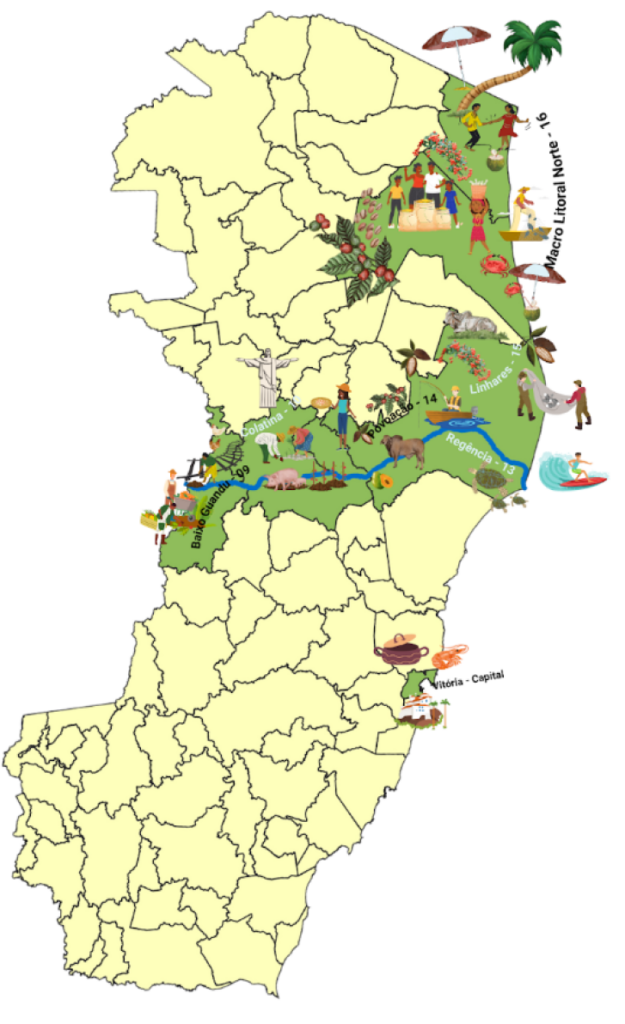
Baixo Guandu
Colatina
Linhares
Povoação
Regência
Macro Litoral Norte