AMAZON FUND
Consult and access content
- PROJETO
- ATIVIDADES
- PUBLICAÇÕES
PROJECT “Using social technologies to reduce deforestation”
Using social technologies to reduce deforestation
|
Project manager |
Interstate Agricultural Development Association – ADAI |
|
Territorial coverage |
Communities in areas of influence of hydroelectric projects in the states of Pará, Mato Grosso, Rondônia and Tocantins. |
|
Beneficiaries |
Riverine families and farmers in areas of influence of hydroelectric projects, who live on rural properties of less than four modules. |
|
Objective |
Implementing family agro-ecological production units, contributing to food security and income generation in an environmentally sustainable way for riverside dwellers and family farmers |
|
Total project value |
R$ 9.075.000,00 |
|
Amount of support from the Amazon Fund |
R$ 9.075.000,00 |
| Amount invested in shares from the project | R$ 9.197.935,00 |
|
Execution deadline |
42 months |
|
Project Evolution | |
|
| |
|
Date of approval |
24.05.2017 |
|
Hiring date |
31/07/2017 |
|
Total amount disbursed |
R$ 9.059.718,63 |
|
Total amount disbursed in relation to the amount of support from the Amazon Fund |
100% |
Contextualization
The Interstate Agricultural Development Association (ADAI) was founded in 1993 as a non-profit organization to implement projects with communities affected by dams related to hydroelectric power generation projects. To carry out this project, local units will be set up in regions where families live who have had their way of life affected by the operation, construction or planning of such projects. There are six implementation centers:
– RO: Santo Antônio HPP, Jirau HPP and Samuel HPP, involving the municipalities of Porto Velho, Candeias do Jamari, Alto Paraíso and Itapoá do Oeste.
• MT: HPP Sinop, involving the municipalities of Claudia and Sinop. • TO: HPP Estreito, involving the municipalities of Philadelphia and Babaçulândia.
– PA: Belo Monte HPP, involving the municipalities of Altamira and Brasil Novo, Vitória do Xingu and Senador José Porfírio.
– PA: Tucuruí HPP, involving the municipalities of Marabá, São João do Araguaia, Bom Jesus do Tocantins and Tucuruí
– PA: (planned development) São Luiz do Tapajós, involving the municipalities of Itaituba, Trairão and Rurópolis.
The Project
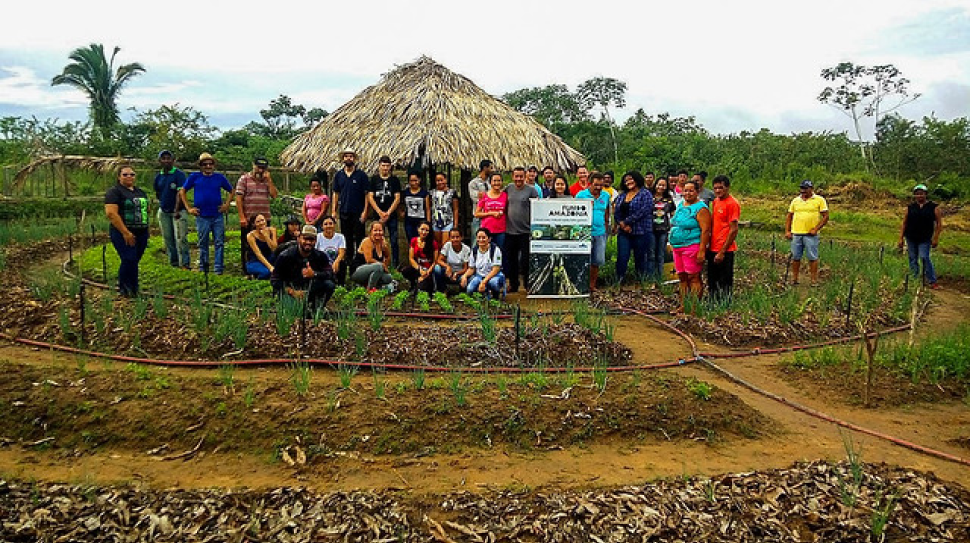
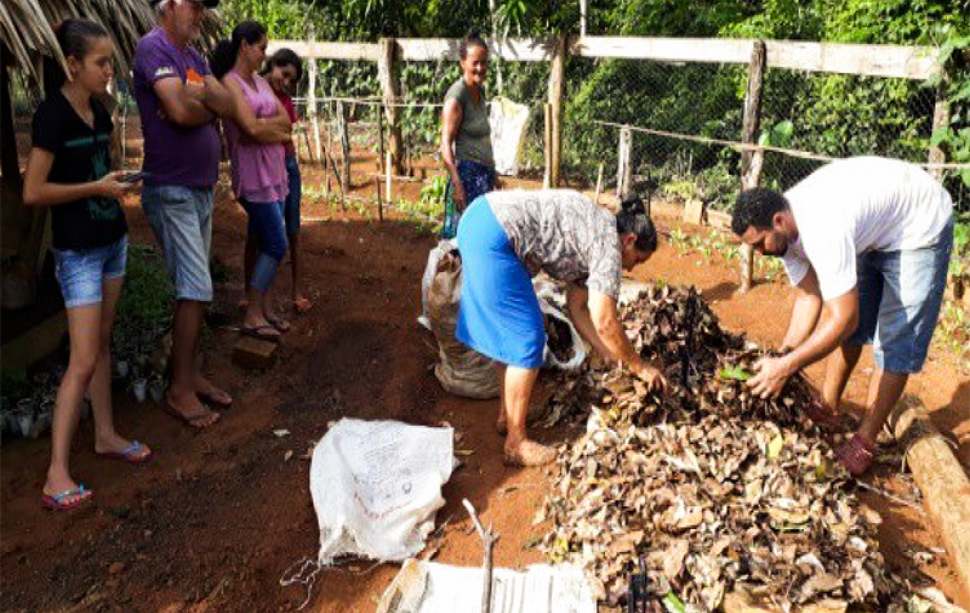
The core of the project is based on promoting agro-ecological food production, with the aim of ensuring food security for families and reducing pressure on natural resources. This will be done using the PAIS method, which stands for integrated and sustainable agroecological production. PAIS is a social technology that involves organic farming, integrated with small animal husbandry, which uses inputs produced on the property itself, preserving and promoting soil quality. It makes it possible to grow diversified and healthier food for consumption and sale, and reduces dependence on outside inputs, thus having a direct link to improving the quality of life of farming families. An additional and complementary element to PAIS is also proposed, which will consist of planting native forest species (such as Brazil nut trees and fruit trees like cupuaçu and açaí), with the aim of diversifying production on a sustainable basis and reforesting degraded areas in the project’s implementation sites. The families will be trained in seedling preparation and plantation management techniques, and will receive assistance from the technical team throughout the project.
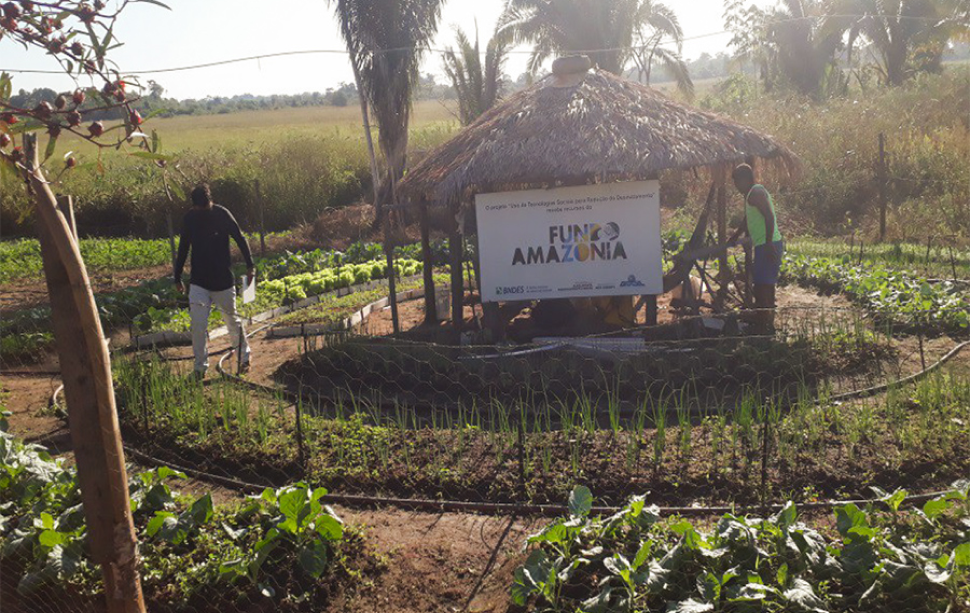
The project plans to implement 240 PAIS, with solar-powered irrigation systems. Combined with technical training for production, the project aims to raise awareness and environmental education among the target public. It is hoped that the implementation of the project will have a disseminating effect, engendering a new dynamic in the area and mobilizing a greater number of families, beyond those who will have PAIS implemented on their properties.
Intervention logic
The project is part of the “Sustainable Production” component of the Amazon Fund’s Logical Framework.
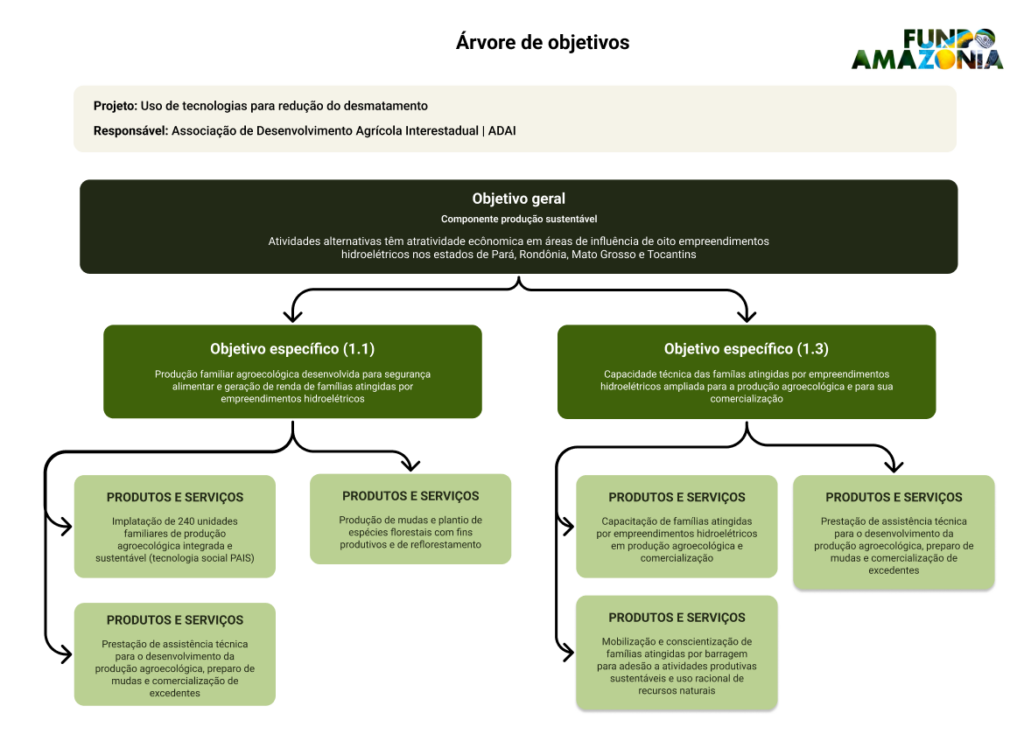
Tree of objectives, that is, how the project’s products and services are linked with the specific objectives and its general objectives.
Attachments
Agroecological production and alternative energies
The implementation of Integrated and Sustainable Agroecological Projects (PAIS) and the implementation of electricity generation panels to irrigate these gardens are in line with the organization’s mission, as opposed to the practices of the conventional food production and electricity generation model. It seeks to dialogue with the need for technical assistance for families, income generation, but also family consumption of healthy food, the sustainable use of natural resources on the properties, the participation of women and young people in all stages of the project, collective work within the family nucleus and between families, as well as the preservation of nature.
Beneficiary families
The “Use of social technologies to reduce deforestation” project directly serves 240 families affected by dams in the states of Tocantins, Pará, Mato Grosso and Rondônia. These are families who live off the land to survive, growing vegetables, planting grains, raising small animals, sustainable extraction and many also fish.
In general, these are families who live on small properties, with great difficulty in accessing public policies such as health, education, technical assistance, electricity and leisure facilities. These are families who have created an identity as peasants and are constantly seeking to overcome difficulties through collective action in order to remain and strengthen themselves on the land.
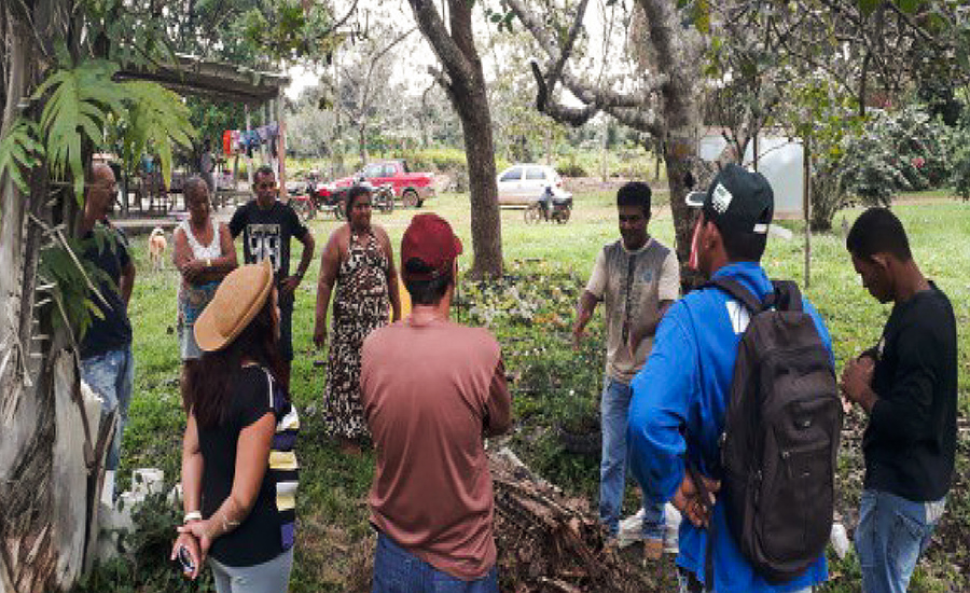
Training and technical assistance
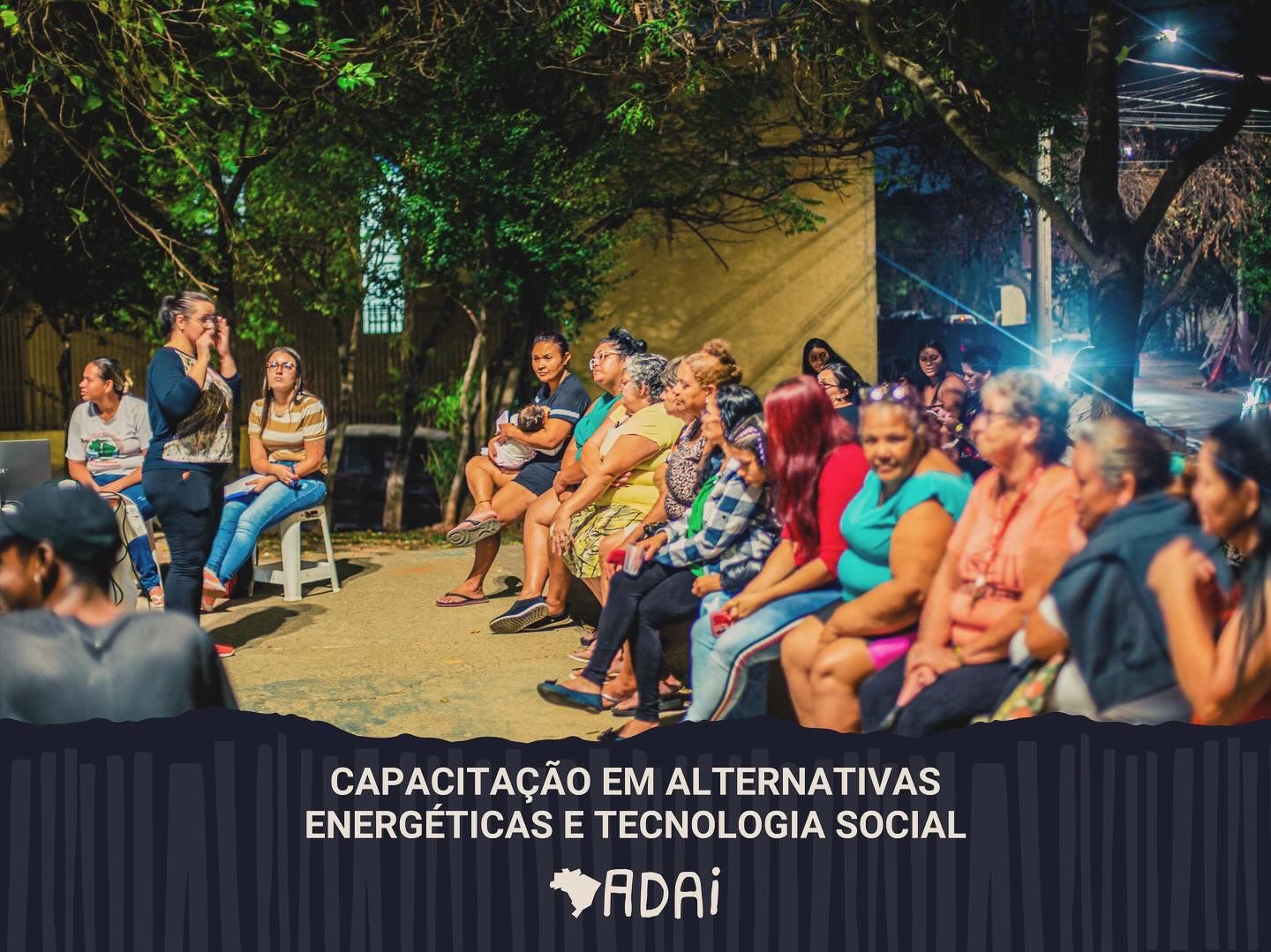
The construction of collective knowledge is one of the purposes of the project and the entity. Through the participation of families in different stages of training and training, combined with technical assistance focused on this reality, the project seeks to rebuild knowledge, as well as strengthen popular culture in the production of healthy foods, the use of alternative energies and respect to people and the environment. It seeks to combine the knowledge and practices of families with the knowledge and learning of a technical team committed to alternative practices, thus rebuilding a new culture of social relations and the environment.
In the training activities provided for by the project, we had the participation of 1,067 people in total, including 556 women and 511 men, the factor that stood out was the participation of women, which exceeded expectations, we hope to continue encouraging and enabling them to continue occupying the different spaces.
5,520 visits were made to the properties of 240 families, with an average of 23 visits per beneficiary family, during the project’s duration.
Reforestation
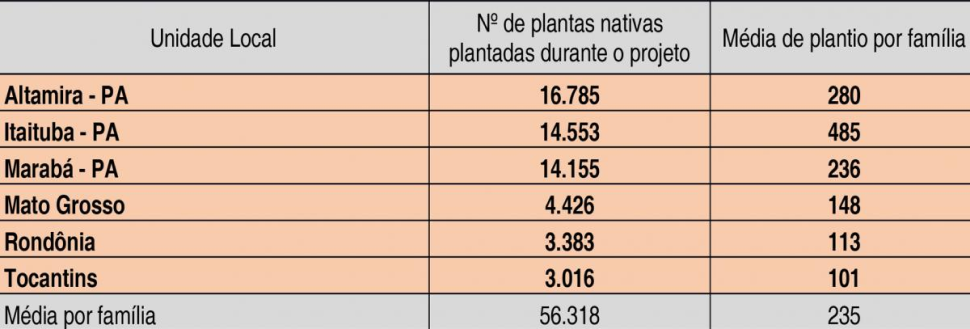
The implementation of social technology PAIS (Integrated and Sustainable Agroecological Production) and alternative energy aims to improve the quality of life of families, through the consumption of healthy foods and income generation. Combined with these products, environmental education to preserve natural resources, as well as the replanting of trees native to the Amazon biome are fundamental in building a collective culture based on respect and preservation of the environment, from now to future generations.
Below you can see the number of seedlings planted during the project period by local unit (region):
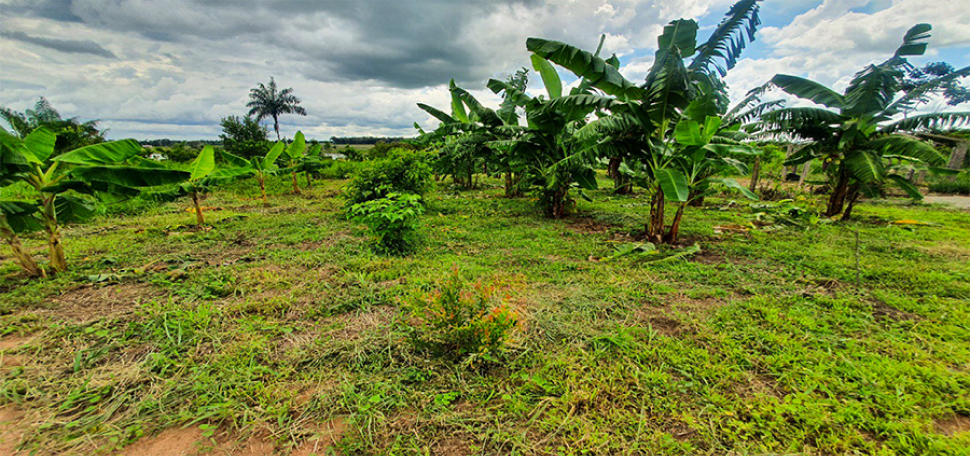
Trees planted on Mr. Odarílio, local unity of Mato Grosso
-

Bulletin N°3 of the “Use of Social Technologies to Reduce Deforestation” Project
Please find attached bulletin No. 3 of the “Use of Social Technologies to Reduce Deforestation” project, an achievement for families affected by dams, carried out by the Interstate Agricultural Development Association (Associação de Desenvolvimento Agricola Interestadual – ADAI) in partnership with the National Bank for Economic and Social Development (Banco Nacional de Desenvolvimento Econômico e…
-
Bulletin N°1 “Using Social Technologies to Reduce Deforestation” Project
Please find attached bulletin No. 1 of the “Use of Social Technologies to Reduce Deforestation” project, an achievement for families affected by dams, carried out by the Interstate Agricultural Development Association (Associação de Desenvolvimento Agricola Interestadual – ADAI) in partnership with the National Bank for Economic and Social Development (Banco Nacional de Desenvolvimento Econômico e…
-
Guidelines for the care and maintenance of the PAIS kits’ electrical and hydraulic systems
The technical team of the Use of Social Technologies to Reduce Deforestation Project is preparing technical guidelines for the beneficiary families. On this occasion, the guidelines are for the care and maintenance of the electrical and hydraulic systems of the kits delivered by the project. The project is an achievement for families affected by dams…
-
Guidelines for the distribution and marketing of produce in the pandemic
The technical team of the Use of Social Technologies to Reduce Deforestation Project is preparing technical guidelines for the beneficiary families. This time, the guidelines are for the distribution and marketing of the production of beneficiary families during the covid-19 pandemic. The project is an achievement for families affected by dams and has been implemented…